
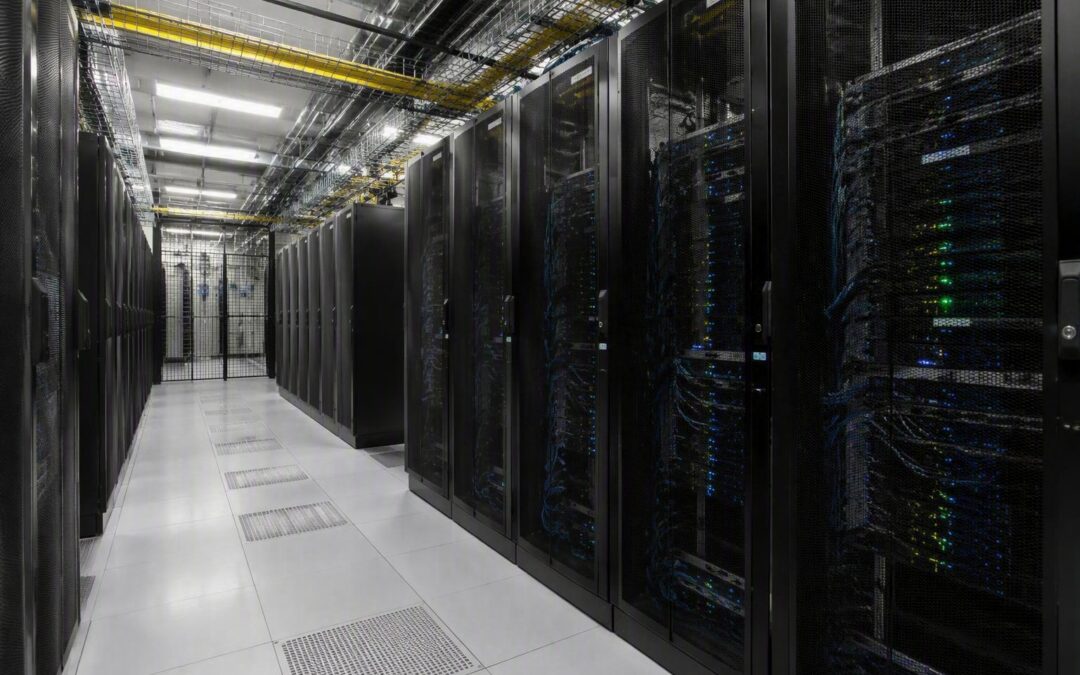
With data centers dominating local and national headlines, many people assume they are a new addition to the American landscape. In reality, data centers have been part of our country’s technological evolution for decades. Their roots can be traced back to the first large-scale computing systems developed in 1945 (What is a data center , n.d.). Over time, these systems evolved from room-sized computers housed on-site to the large off-site facilities that became commonplace during the Dot-Com boom of the early 2000s.
Today, the rapid growth of artificial intelligence has once again placed data centers at the center of public attention. As often happens with emerging technologies, increased visibility has brought both valid concerns and a significant amount of misinformation and misunderstanding. One of the most common topics of discussion is water consumption and the impact data centers have on local communities.
While concerns about water usage deserve attention, much of the public conversation fails to account for how dramatically the industry has evolved in recent years. Historically, many facilities relied on water-intensive cooling systems, including open-loop cooling methods and direct access to local aquifers. However, the next generation of data centers is being designed with sustainability and resource conservation as key priorities.
Today, many operators are investing in closed-loop cooling systems, which recycle water rather than continuously drawing new supplies. Facilities are also increasing the use of non-potable water sources, including reclaimed wastewater, brackish water, and industrial effluent that would otherwise not be suitable for residential consumption. Some new developments are incorporating desalination capabilities, while others are raising operating temperature thresholds and utilizing advanced air-cooling solutions to reduce water demand even further. These innovations represent a significant shift in how the industry approaches environmental stewardship and community impact (Hegde, 2026).
The adoption of these technologies is no longer theoretical. Hyperscale providers and data center developers are actively integrating these solutions into both current and future projects. According to recent reporting, more than 44% of existing and planned facilities are utilizing advanced water-saving technologies designed to reduce strain on local water resources. Interestingly, the conversation around data centers often focuses exclusively on resource consumption while overlooking their potential community benefits. The same report highlights positive economic impacts in certain regions, including reductions in poverty rates, increased local investment, and the introduction of new community resources and infrastructure supported by data center development (Potas, 2026). As AI continues driving unprecedented demand for digital infrastructure, it is important that discussions around data centers remain balanced and informed. Questions about environmental impact, energy consumption, and water usage are all valid and necessary. However, those conversations should also acknowledge the technological advancements being implemented to address those concerns.
Data centers are not a new phenomenon. What is new is the scale of innovation being applied to make them more efficient, more sustainable, and more integrated with the communities they serve. Understanding both the challenges and the solutions is essential to having an informed discussion about their role in our future.